 Image 1 of 1
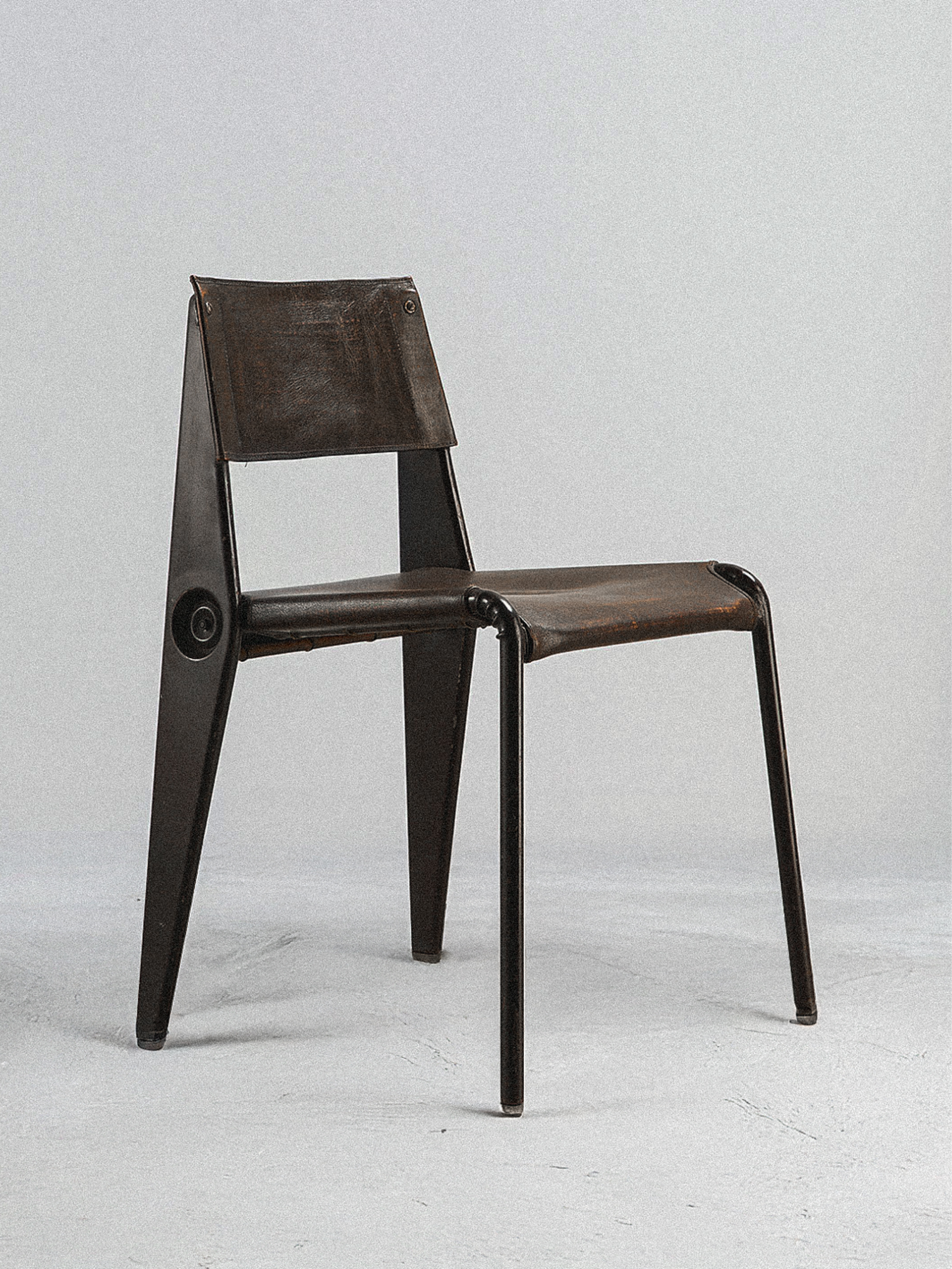
The Jean Prouvé Cafeteria Chair, designed in the 1930s by the French architect and engineer Jean Prouvé, exemplifies industrial elegance with its utilitarian form and durable construction. Characterized by a stamped steel seat and backrest mounted on a folded steel-frame base, the chair combines functionality with refined detailing—visible in its slender proportions, gently curved back, and exposed rivet joints. Originally conceived for communal dining in factories, schools, and public institutions, it reflects Prouvé’s commitment to mass-producible, affordable furniture without sacrificing comfort or visual harmony. Finished typically in enamel or lacquered paint, the chair’s modest palette and robust materials have allowed it to age gracefully; today it is sought after by collectors and designers for both vintage authenticity and contemporary interiors that favor minimalist, industrial aesthetics.
The Jean Prouvé Cafeteria Chair, designed in the 1930s by the French architect and engineer Jean Prouvé, exemplifies industrial elegance with its utilitarian form and durable construction. Characterized by a stamped steel seat and backrest mounted on a folded steel-frame base, the chair combines functionality with refined detailing—visible in its slender proportions, gently curved back, and exposed rivet joints. Originally conceived for communal dining in factories, schools, and public institutions, it reflects Prouvé’s commitment to mass-producible, affordable furniture without sacrificing comfort or visual harmony. Finished typically in enamel or lacquered paint, the chair’s modest palette and robust materials have allowed it to age gracefully; today it is sought after by collectors and designers for both vintage authenticity and contemporary interiors that favor minimalist, industrial aesthetics.