 Image 1 of 3
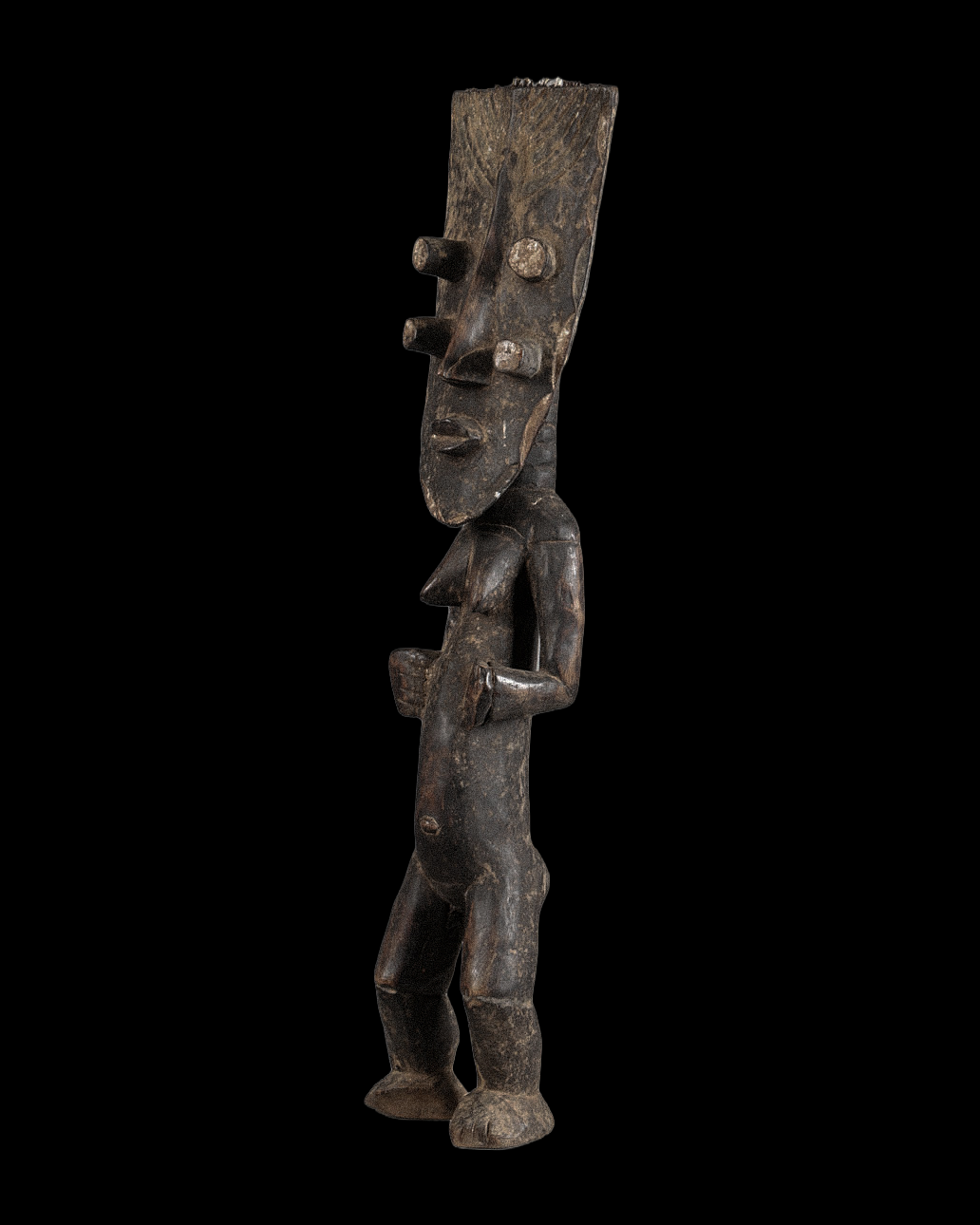 Image 2 of 3
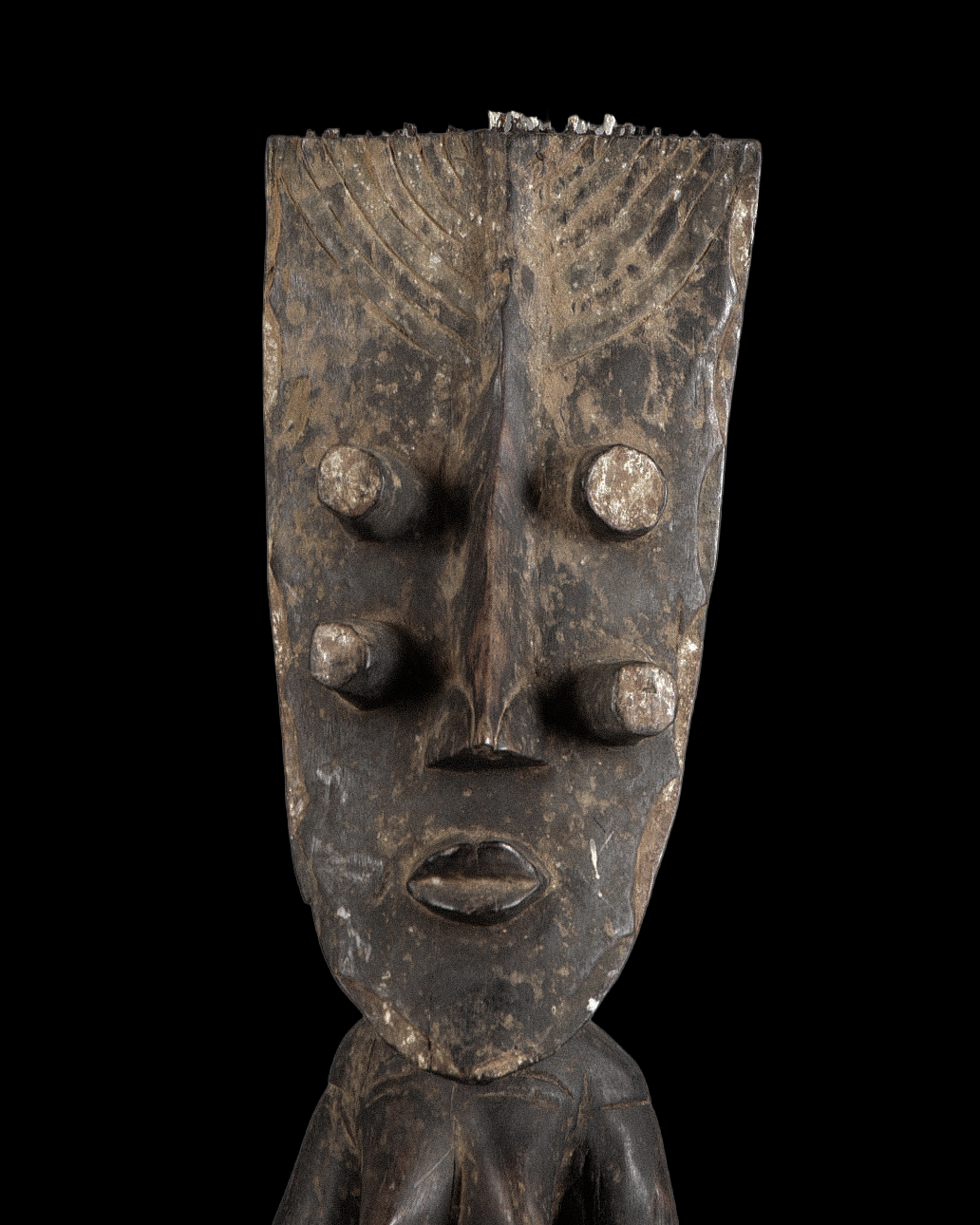 Image 3 of 3
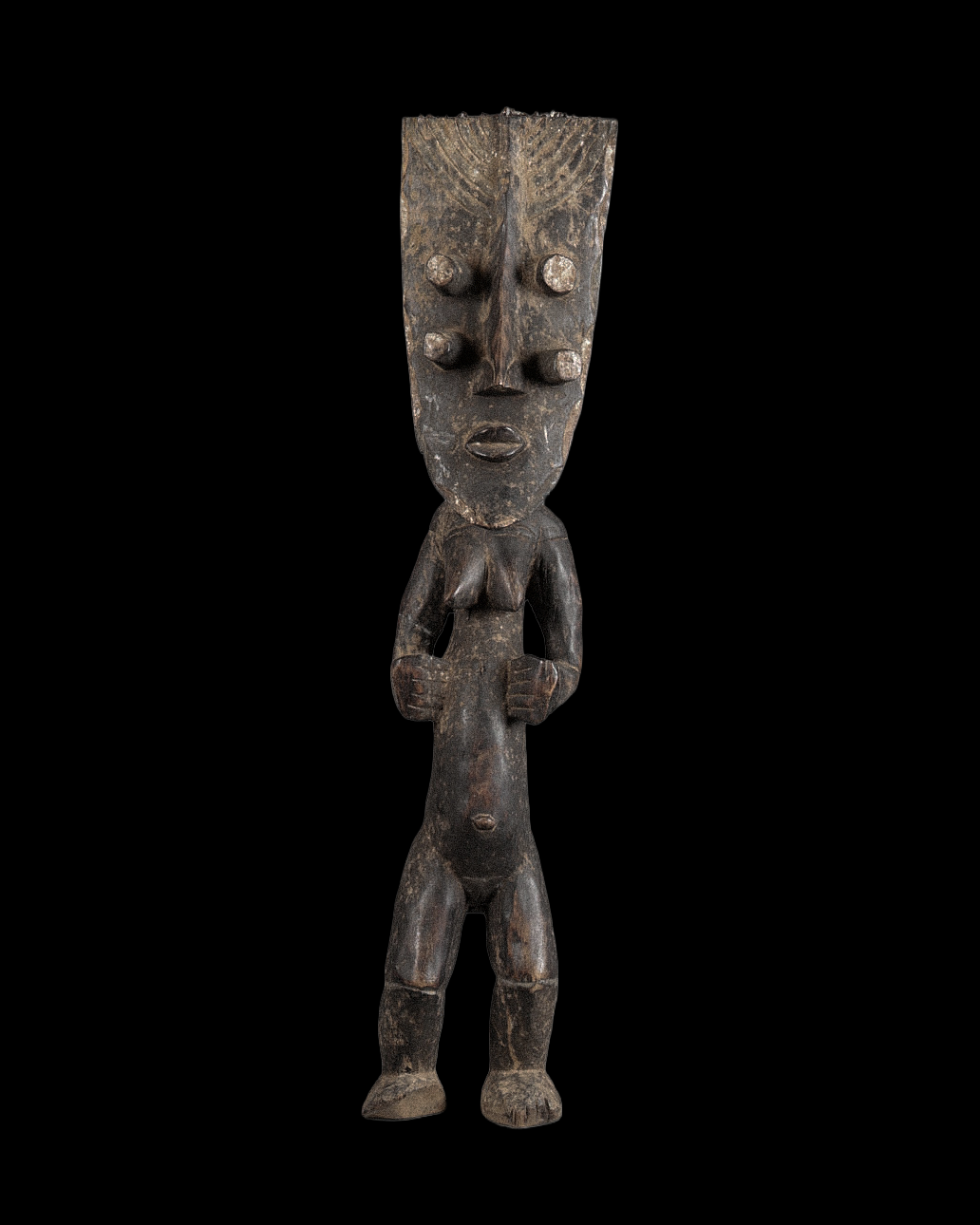
This is a striking ritual sculpture from the Liberia, attributed to the Grebo people.
The figure’s most distinctive feature is its large, shield-shaped head with four projecting eyes—a hallmark of Grebo carving. These tubular or knob-like eyes are not meant to be naturalistic; instead, they likely symbolize heightened vision or spiritual awareness, enabling the figure to “see” beyond the physical world.
The elongated body with simplified anatomy and hands placed at the torso reflects a stylized human form, typical of West African ritual sculpture. Such figures were often used in ceremonial or protective contexts, possibly linked to secret societies or spiritual practices.
At 92 cm tall, this is a relatively substantial example. The note about missing feathers suggests it may originally have included additional materials (like feathers or fibers), which were commonly added to enhance its ritual power and visual impact.
Condition-wise, “normal wear” is expected for an object of this age and use, and can even support authenticity, especially in ethnographic art.
This is a striking ritual sculpture from the Liberia, attributed to the Grebo people.
The figure’s most distinctive feature is its large, shield-shaped head with four projecting eyes—a hallmark of Grebo carving. These tubular or knob-like eyes are not meant to be naturalistic; instead, they likely symbolize heightened vision or spiritual awareness, enabling the figure to “see” beyond the physical world.
The elongated body with simplified anatomy and hands placed at the torso reflects a stylized human form, typical of West African ritual sculpture. Such figures were often used in ceremonial or protective contexts, possibly linked to secret societies or spiritual practices.
At 92 cm tall, this is a relatively substantial example. The note about missing feathers suggests it may originally have included additional materials (like feathers or fibers), which were commonly added to enhance its ritual power and visual impact.
Condition-wise, “normal wear” is expected for an object of this age and use, and can even support authenticity, especially in ethnographic art.